


- Practice balance exercises at least two to three times a week to improve your stability and balance.
- Start slow, focus on form, and use support as needed.
- As your balance improves, try increasing the difficulty or frequency of your exercises.
You may remember when standing on one leg, walking along the curb, or jumping around felt effortless. However, as we age, our bodies change and our balance changes as well. Loss of balance is common as we age due to natural declines in muscle strength, reaction time, proprioception, and spatial awareness. “Equilibrium begins to decline in everyone from the age of 40, and declines even more rapidly after age 60, so we need to train our balance to combat age-related decline and maximize maintenance,” he says. Bill Kelly, DPT, ATC, CSCS, Cert. D.N.. These changes can make everyday tasks, such as climbing stairs, reaching for items on shelves, and walking on uneven ground, seem more difficult and even dangerous. Each year, nearly one in three older adults falls, and a quarter of those falls result in a serious injury, such as a femoral neck fracture.14
After the age of 50, people often lose their balance, but that doesn’t have to be the case. Research shows that regular balance exercises can significantly improve stability in older adults.2 “As we all age, balance exercises should become an important part of our athletic practice,” he says. Paul Fass, PT, DPT, OCS. “Practicing and performing balance exercises regularly can help you maintain better balance and slow down the decline in balance-related events and injuries.”
To get started, here are six expert-recommended balance exercises for beginners to safely build strength and stability.
supported one leg stand
These one-legged stands are easy to do at home and will change your balance. “Most balance exercises benefit by increasing stability, training your body to more accurately sense its position in space. Single-leg stands are particularly effective because your base of support is reduced and your brain and muscles work together to realign your center of gravity.” Molly Rucker PT, DPT, SCS, ATC, CSCS.
“This exercise strengthens the stabilizing muscles in your feet, ankles, hips, and core that are essential for daily movement and balance,” she added.
Instructions:
- Stand near a counter, table, wall, or sturdy chair for support.
- Place your hands on your hips or rest them lightly on a support if needed.
- Lift your left leg off the ground and raise your thigh until it is parallel to the floor or as high as possible without losing your balance. Shift your weight onto your other leg to strengthen your core.
- Press and hold for 20 to 30 seconds or as long as you feel comfortable.
- Slowly lower your left leg and switch to your right leg.
- Repeat 2-3 times per leg.
Advanced exercises: hold. One leg stand without support Or close your eyes for 20-30 seconds.
heel-to-toe walking
Heel-to-toe walking is a big balance changer. “I place great importance on gait mechanics. How the foot lands, how the toes are positioned, and how the muscles react during the movement are all important.” Melanie Sinclair, CPT, PES, CES Say. “Heel-to-toe walking can help you improve how you move forward efficiently, whether you’re walking, running, lunging, or just moving through daily life.”
Instructions:
- Stand tall and extend your arms to your sides for balance.
- Place one foot directly in front of the other, with the heel of your front foot touching the toes of your back foot.
- In this way, take about 5 to 10 steps forward and aim to walk in a straight line.
- Turn around and return to your starting point.
Advanced exercises: Walk slowly from heel to toe, pausing briefly with each step to test your balance and control.
sit and stand
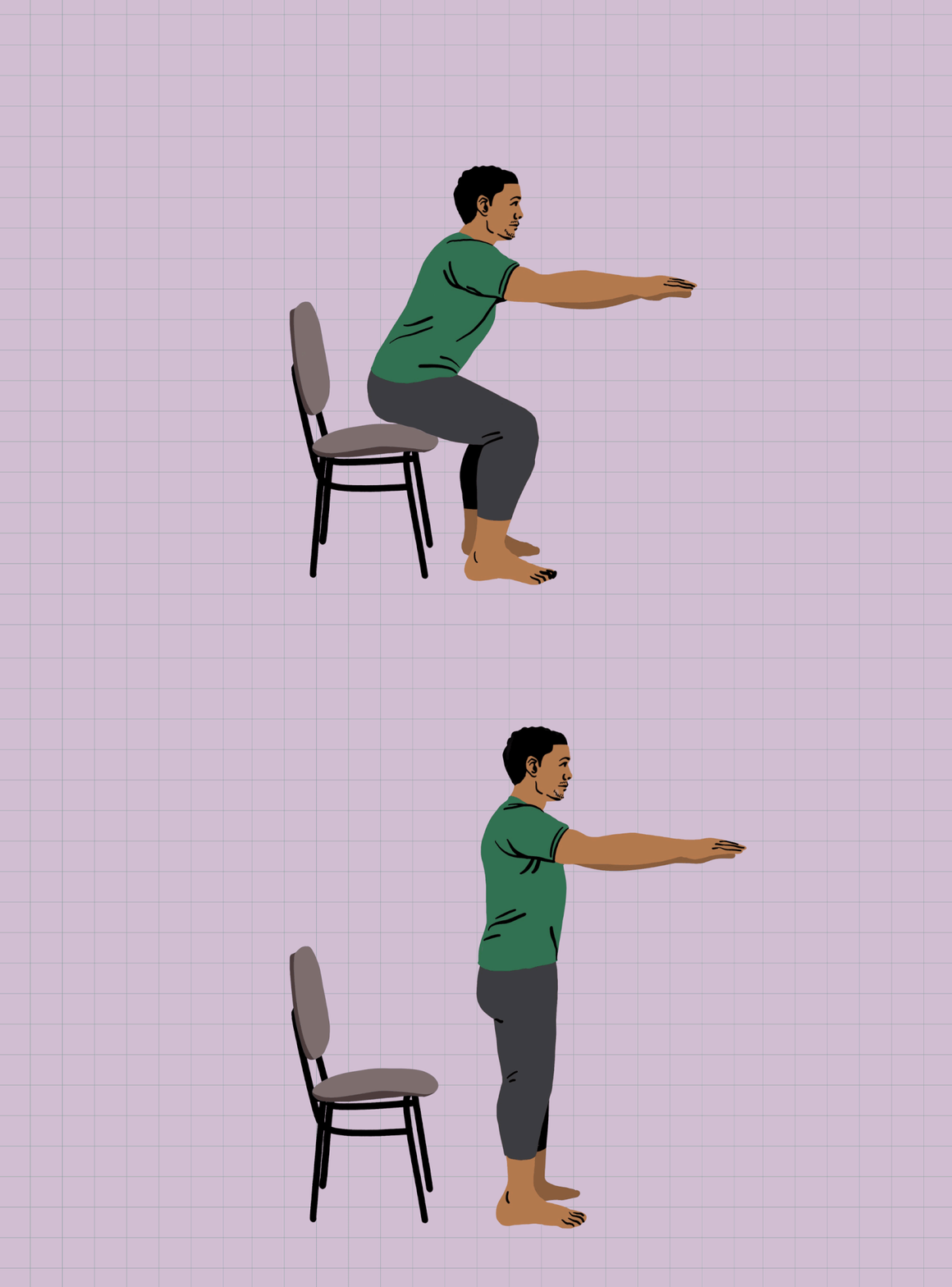
Getting up from a chair is a daily action that most people do multiple times a day. However, changes in balance can make this simple movement more difficult. “Sitting and standing are functional activities that occur throughout the day for self-care and repositioning.”Share Karena Wu, PT, DPT, OCS. “This means that when you sit down and stand up slowly, you put the right amount of weight on your legs for good movement. hip joint strength To stand completely erect. ”
Instructions:
- Sit in a sturdy chair with your feet flat on the floor and your hands in your lap.
- Lean forward slightly, engage your core, and push through your heels to fully stand up.
- Slowly lower yourself back down to a sitting position.
- Repeat 10 to 15 times, resting as needed.
Tip: Move slowly and carefully. Standing up and down slowly will strengthen your muscles and improve your balance.
Advanced exercises: Perform them slowly from a low chair or while holding a light weight, or progress to traditional squats without a chair.
Hip hinge supported
Supported hip hinges test your balance during movement. “When you hinge at your hips, your center of gravity shifts back and forth, and your muscles have to constantly adjust to stabilize your body,” says Rucker.
“Hip hinges are also good for balance because they strengthen core and posterior chain muscles such as the glutes, hamstrings, and back, which are important muscles for controlling posture and movement. The light support is perfect for people who need an extra sense of security, allowing them to practice correct form without fear of failure,” she added.
Instructions:
- Stand about 1 foot away from a wall, with your back to the wall and your feet hip-width apart.
- Place your hands on your hips or rest them lightly against a wall for support.
- Bend at the waist and slowly push your hips back, keeping your back straight. Your buttocks may lightly touch the wall to guide you.
- Lower until you feel a slight stretch in your hamstrings.
- Slowly push your hips forward and return to a standing position.
- Repeat 10-15 times.
Tip: Avoid bending your knees or leaning forward. Concentrate on bending your hips and slowly pushing your buttocks back.
Advanced exercises: Place your hands on your thighs and slowly slide them towards your knees or shins. Alternatively, you can go for the traditional Romanian deadlift.
standing side leg raises
Performing side leg raises while standing will help you maintain your lateral balance. “Standing leg raises improve balance by shifting your weight onto one leg and the other leg outward, allowing your body to control side-to-side stability,” Rucker explains.
“The main muscles that work are the muscles on the outside of the hip joint when standing, especially gluteus mediusKeeps your pelvis horizontal and prevents it from tipping inward or falling over. At the same time, your core and supporting ankle muscles make fine adjustments to keep your body stacked on top of a supporting base. “This allows the body to manage lateral balance and alignment,” she added.
Instructions:
- Stand next to a wall, counter, or sturdy chair and place your hands on it for support.
- Shift your weight to the leg closest to the support.
- Slowly lift your other leg to the side, keeping it straight.
- Lower your legs without completely touching the floor, unless necessary for balance.
- Repeat 10-15 times per leg.
Advanced exercises: Perform side leg raises without support or loop resistance bands Just above the knee.
step up
As you get older, going up and down stairs becomes more difficult, but by stepping up your steps, you can confidently go up and down airplanes. “Step-ups are an important unilateral strength and balance activity that mimics going up and down stairs,” says Wu. “It focuses on using multiple joints and muscles in the legs to raise and lower with control and proper motor coordination.”
She added: “This helps reduce falls if someone trips and lands on one foot, which is also important.” leg strengthening And balance exercises can help with other activities, such as getting out of the car with less effort. ”
Instructions:
- Use sturdy steps, stairs, or step boxes about 0.5 feet (6 inches) high.
- Stand facing the steps, holding onto the railing or placing your hands on the wall if necessary.
- Place your left foot on the step and press through your heel to raise your right foot to meet the step.
- Step forward with your right foot, keeping your left foot on the step.
- Repeat 10-15 times per leg.
Tip: As you push through your heels, you should feel your glutes doing most of the work.
Advanced exercises: Increase the resistance by using a higher step box or holding a dumbbell in the hand opposite the stepping leg.
How to practice balance safely
To reduce the risk of falls and injury, keep these safety tips in mind.
- Get help if you need it. Place a wall, sturdy chair, or counter nearby that you can hold onto until you are stable.
- Please leave some space. “Make sure the area is tidy and free of clutter to reduce tripping hazards,” says Rucker.
- Please wear appropriate shoes. supportive, non-slip footwear It can prevent slipping and improve stability.
- Start slowly. Perform the exercise at a controlled pace, as rushing can increase the risk of losing your balance. “Starting with something easy, listening to your body, and gradually increasing the difficulty is also a great way to continue making progress while staying safe,” says Ruecker.
- Train your core. A strong and attractive core supports better balance and control.
- Progress gradually. Increase the difficulty level only when you can perform the exercise confidently and safely.
- Please concentrate your gaze. Looking at a fixed point in front of you, such as a picture on the wall, will improve your stability.
- Please seek professional help. Physical therapist or certified person personal trainer We can provide personalized recommendations.
How often should you do balance exercises?
Research supports this recommendation, showing that older adults who practice balance training three times a week improve their stability and reduce their risk of falls.3 “The optimal frequency to perform balance exercises is one that you can do consistently,” Fass says. “If you want to incorporate it into your regular exercise program, we recommend doing it at least two to three days a week.”
Exercise plan you want to try
our expert opinion
Maintaining and improving your balance is important at any age, but it’s especially important after age 50. Adding balance exercises to your daily routine will strengthen your muscles, prevent falls, and make everyday tasks easier. Focus on slow, controlled movements and proper form, and only progress to more difficult variations when you can perform each exercise with confidence. For best results, aim to practice balance exercises several times a week.
