


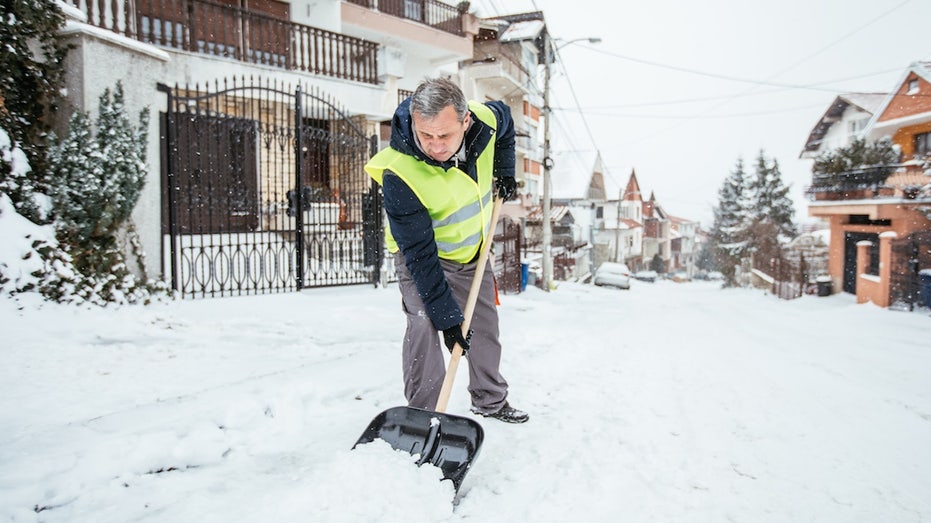
With snow blanketing parts of the United States this week, heart health experts are warning that shoveling snow can be particularly taxing on the heart. senior citizen.
A 2025 Mayo Clinic study found that just 10 minutes of shoveling heavy snow can increase your heart rate to about 97% of your maximum heart rate. It was also found that exposure to cold air increases blood pressure and reduces coronary blood flow.
Although there is no official age to be “too old,” some cardiologists recommend that people over 45 should take more precautions to lower their chances of heart events.
“There’s no hard age limit, but generally it’s mid-40s and above, but we tend to be a little more cautious about people who aren’t particularly active. [without] regular exercise,” Dr. Navjot Kaur Sobti, an interventional cardiac specialist at Northwell’s Northern Westchester Hospital in Mount Kisco, New York, told FOX News Digital.
“Certainly in people who are over 65 and have risk factors for heart disease, such as high blood pressure, high cholesteroldiabetes, obesity, sedentary lifestyle, etc. We recommend using extreme caution when shoveling snow,” she advised.
Dr. John Osborn, a practicing cardiologist in Texas and volunteer with the American Heart Association, shared similar guidance for people over 45, especially men over 65.
Simple nightly habits linked to healthy blood pressure, study suggests
“Unless you’re in good cardiovascular health and well-conditioned, it might be a good idea to ask someone for help,” he said in an interview with Fox News Digital.
The effects of snow removal are of particular concern for people who are at risk for cardiovascular disease and have a past history of cardiovascular disease. heart attack or strokeaccording to cardiologists. “People with these characteristics or who have had bypass surgery or coronary angioplasty should not shovel snow under any circumstances,” he said.
Dr Osborn said heart attacks are more common in people who are usually sedentary and sit in front of a computer all day with little exercise. “Then once or twice a year they go out and try to shovel the driveway. heavy snowAnd that unexpected effort can unfortunately lead to tragedy. ”
Sobti points out that the stress placed on the heart while shoveling snow is similar to, and may even exceed, that experienced during a cardiac stress test.
When the temperature is low, blood vessels constrict, blood pressure spikes -This, combined with pre-existing high blood pressure and the effort of lifting snow, can put a huge strain on the heart, she warned.
“It’s like an at-risk person undergoing an unsupervised maximal exertion test without the active monitoring of a cardiologist,” Sobti told Fox News Digital.
In addition to the effort involved in shoveling snow, the frigid temperatures also play a role. put a strain on the heart. Recent studies have shown that cold exposure is responsible for nearly twice as many cardiovascular deaths as heat exposure, including heat exhaustion.
Click here to sign up for our health newsletter
The study, published last month in the Annals of Internal Medicine, also found that people 65 and older had higher rates of body temperature-related mortality.
“So the risks are very high,” Sobti warned. “In fact, when combined with the physical stress of shoveling snow itself, your blood pressure spikes.”
Cardiologist says it’s ideal to have someone else help snow removal But if you do use a shovel, she recommends doing “pushing or sweeping” motions at your own pace, rather than heavy lifting.
To protect yourself from the cold, Sobti also recommends covering your mouth, nose and extremities, wearing a hat and gloves, and being especially careful on windy days.
Using an automatic snow blower can still increase your heart rate, reaching up to 120 beats per minute compared to 170 beats per minute while shoveling snow, the American Heart Association says on its website.
Test yourself with our latest lifestyle quiz
Sobti stressed that it’s also important to be aware of potential heart disease symptoms while shoving.
If you start experiencing warning signs such as chest pain, shortness of breathheart pounding and palpitations, these should not be ignored.
For more health stories, click here
Sobti said even if symptoms subside after a few minutes, “you may still have symptoms of a heart attack” and you should call 911 to get diagnosed.
“It’s really better to be safe than sorry.”
