


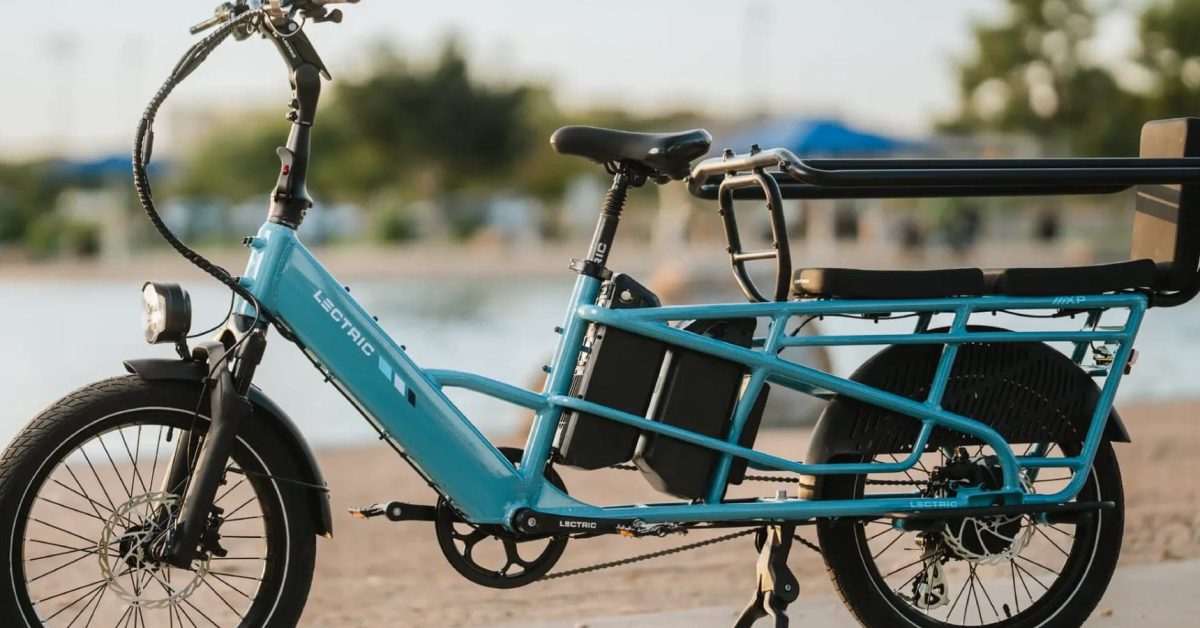
Tampa is bringing back one of the most generous e-bike incentive programs in the country, and some residents could get up to $3,000 off the price of a new e-bike.
The City of Tampa’s Parking Department has announced that its electric bike voucher program will be reinstated in 2026. The program is a lottery-based initiative that awards qualified applicants between $1,000 and $3,000 towards the purchase of a new electric bicycle. With $500,000 in funding this year, the program will offer up to 248 vouchers, including 81 standard vouchers valued at $1,000, 82 low-income vouchers valued at $2,000, and 85 very low-income vouchers valued at $3,000.
The application period has already begun and will run until February 27, according to the local NBC News affiliate. W.F.L.A.. Tampa residents age 18 and older can apply online, in person at select e-bike rodeo events, or at the city’s Parking Department office. Applicants will be required to provide a signed purchase quote from one of seven participating local bike shops, and the recipient will be required to purchase a new helmet along with the e-bike, a modest criterion to ensure applicants are seriously interested in purchasing an e-bike.
Voucher applies to new Class 1 pedal-assist e-bikes and Class 2 models with throttle assist. Adaptive e-bikes for riders with special needs are also eligible.
City officials have made it clear that this is not a free bike giveaway. But for very low-income residents, a $3,000 voucher can cover most or all of the cost of an electric bike for commuters. This type of support can significantly lower the barrier to entry for anyone considering swapping four wheels for two.
It’s not just Tampa.
In recent years, State and local governments across the United States has been experimenting with an electric bike incentive program aimed at reducing dependence on cars, reducing emissions, and improving transportation equity. Programs in states like Colorado, California, Minnesota, and Washington, D.C., offer point-of-sale rebates or post-purchase rebates, often tailored to income. Few can match Tampa’s top-of-the-line $3,000 incentive, but even smaller rebates ranging from $300 to $1,200 have helped thousands of riders make the leap.
These programs often target the very real transportation disparities faced by low-income workers. For many households, owning a car means insurance payments, fuel costs, maintenance costs, registration fees, and the ever-present risk of unexpected repairs. For some, relying solely on public transportation means longer commutes, limited route options, and missed work opportunities. Rideshare services can fill that gap, but daily use can quickly become expensive.
In contrast, electric bikes offer lower operating costs and flexible door-to-door mobility. Recharging costs are often measured in pennies per month. Maintenance costs are negligible That’s a fraction of what most drivers spend each year.
The City of Tampa’s program, which has awarded more than 450 vouchers so far in 2023 and 2024, shows that local governments are increasingly seeing e-bikes as a legitimate transportation option that can serve as an alternative to cars or simply a new option for people who don’t have other independent transportation options.


FTC: We use automated affiliate links that generate income. more.
